Gas pipe sizing & purge
AS/NZS 5601.1:2022 Appendix F method and Appendix D purging · Cl 6.4.6 ventilation · Copper AS 1432 Type B
Supply
Pipe sections
Work back from the furthest appliance. Enter the total load each section carries (everything downstream of it).
Convert kW to MJ/h
MJ/h = kW × 3.6 (Clause F.3.1(a)).
Results
| Section | Load MJ/h | Min size | Capacity MJ/h | Velocity m/s | Check |
|---|
Capacity of each size at this length
| Size | Bore mm | Capacity MJ/h | m³/h |
|---|
How this is worked out
Longest-length method (F.3): every section is sized using the full longest run length and the full allowable pressure drop.
Flow is calculated the way Appendix F says its tables were made (F.1.2–F.1.5): isothermal compressible flow with Churchill's friction factor, a 50% length allowance for fittings, smooth copper at minimum bore, and the standard's gas properties (natural gas: 38 MJ/m³, relative density 0.6; propane: 96 MJ/m³, relative density 1.5).
Spot-checked against the copper tables for both gases: results land within about 1–2 MJ/h of the printed figures.
Velocity shading: the tables grey out sizes with excessive velocity (F.1.6), and short runs under 100 diameters long need a performance-based design (F.1.7). The standard doesn't print a velocity number, so this tool flags anything over 20 m/s as a rough warning only. For a compliance job, confirm the chosen size against the matching Appendix F table.
Installed pipe
Add every run, branches included (D.4.1). Volume uses the mean bore of Type B copper.
Result
| Run | Length m | L/m | Volume L | Inert gas if opening up? |
|---|
Inert gas column: when you open up an existing gas line, a section longer than the Table D.6 length for its size needs the remaining gas displaced with an inert gas (nitrogen preferred) (D.6).
Sub-meter purge
Pass five times the meter's volume through it and watch the test dial (D.3).
Before and during the purge
- Mark out the purge area and clear every ignition source: pilots, flames, switchgear. No smoking or phones (D.2).
- All appliance connections gastight, appliance valves off, no open ends. Plug or cap branches without an appliance, and purge them too (D.4.2).
- Purge from an outside appliance or the one furthest from the meter. If ventilation is poor, run a hose to outside (D.4.2).
- LPG is heavier than air: let it fully disperse before any ignition. Never purge into a combustion chamber or confined space (D.4.2).
- After any work, purge all air out before lighting anything, and purge each branch individually (Cl 3.3.3).
Space
Open-plan areas with no doors between them count as one space. Measure as if any removed door were still in place (Table 6.4.6.2 Note 6).
Appliances in this space
Result
| Opening | Where | Free area each, mm² | e.g. square, mm |
|---|
How this is worked out
Australia only, new appliance installations (Cl 6.4.6). Natural ventilation per Table 6.4.6.2, using the method in Cl 6.4.6.3.1 (open flued only), 6.4.6.3.2 (flueless only) or 6.4.6.3.3 (both).
G = total open flued + flueless input ÷ space volume. Above 0.4 MJ/h/m³, extra ventilation is needed. With flueless appliances too, H = flueless input ÷ volume: if H is 3 MJ/h/m³ or less, vents are sized on the open flued input only; above 3, they're sized on the total input using the flueless vent rules.
Residential garages and plant rooms get no allowance for gaps around doors and windows, so vents are always worked out there.
Via an adjacent room: the openings between the two rooms are always needed. The vent from the adjacent room to outside can be left out if the input over the combined volume of both rooms is within the limit (Note 5).
Free area is per opening. No vent can be narrower than 6 mm. Room-sealed appliances don't need ventilation to run. Flueless space heaters follow Cl 6.4.7 and Table 6.10.6.3 instead, so they're not calculated here.
Caravan & boat ventilation
AS/NZS 5601.2:2020 Section 7 · Minimum free area, Clause 7.3.1
Vehicle or vessel
Gas appliances
Use the input from each rating plate. Include cookers.
Figures are the LPG ratings from the maker's or supplier's specs. Always check the appliance's own rating plate and change the number if it differs.
Result
| Appliance | MJ/h | Counted in U? |
|---|
Position rules
Vent warning label
Fixed on or next to both the high and low vents. Characters at least 4 mm high (Cl 7.7).
How this is worked out
Total permanent ventilation is the greater of 4 000 mm² or V = (610 × U) + (650 × P) (Cl 7.3.1).
U is the input of every appliance in the space except room-sealed ones, cookers included, in MJ/h. A gas fridge in a sealed recess counts as room-sealed (Note 4). An appliance in a locker or compartment outside the caravan floorplan isn't counted as being in the caravan (Note 2).
If every appliance is room-sealed, the minimum is 4 000 mm² (Cl 7.3.1).
Unit conversion: 1 kW = 3.6 MJ/h, 1 000 BTU/h = 1.055 MJ/h (Note 5).
Mesh and louvres cut the free area. As a guide, double the area where mesh is used (Note 6).
This is the minimum for safety and should be exceeded where possible. It doesn't replace normal opening windows (Note 3). For mobile catering vehicles use AS/NZS 5601.1 instead (Note 7).
Calculated tool for checking your work. Confirm against AS/NZS 5601.2 and the appliance manufacturer's instructions.
Contents
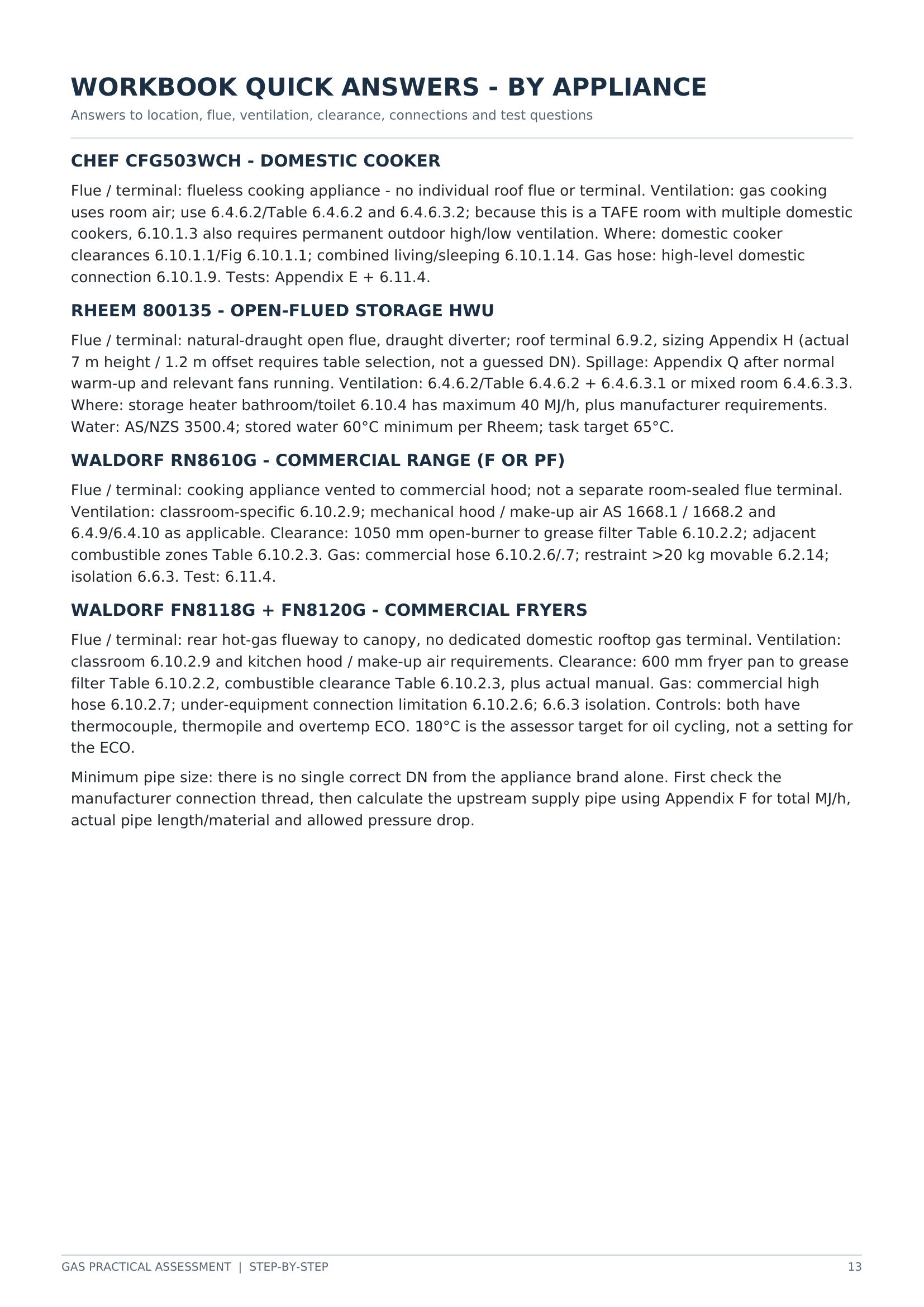

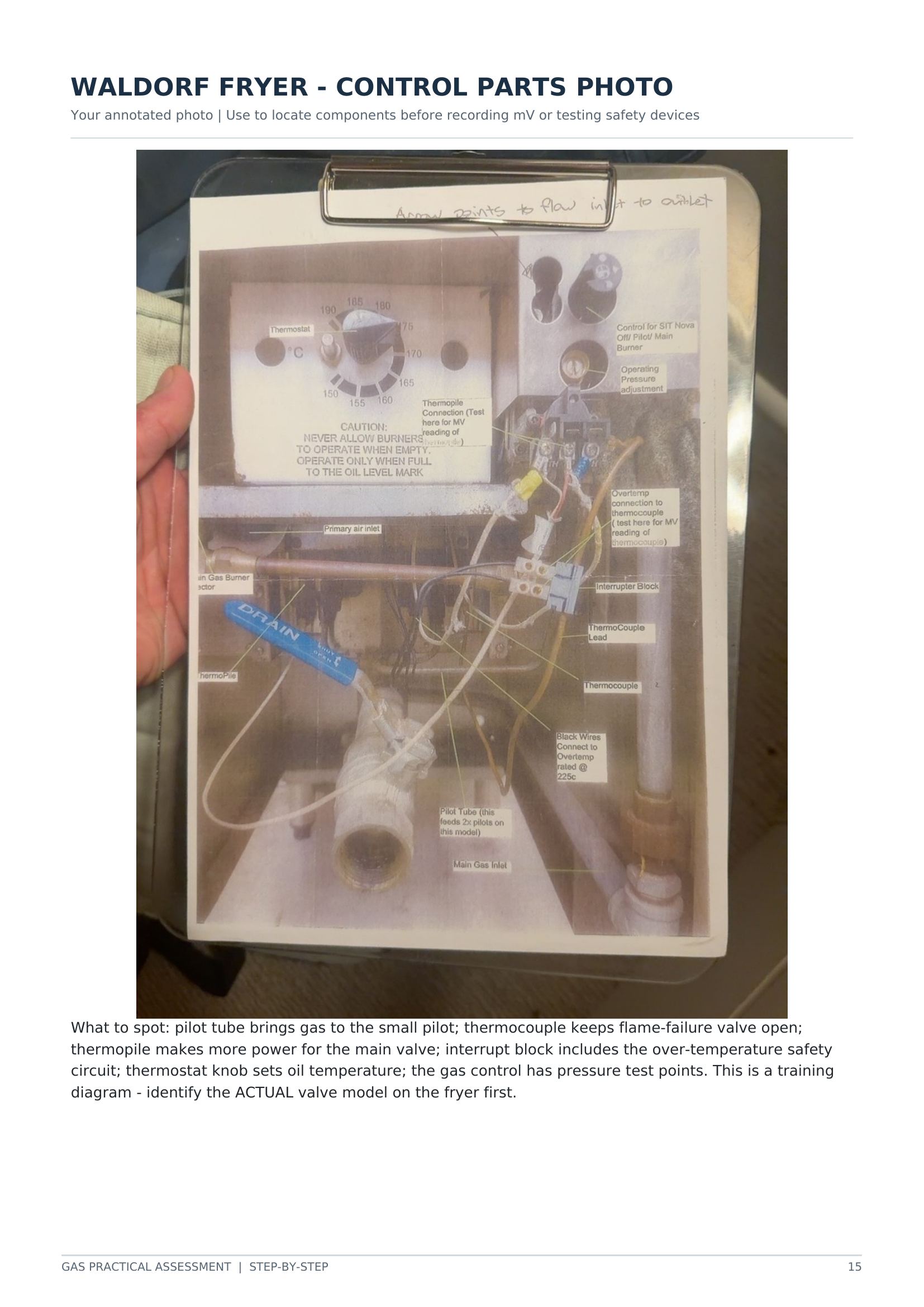
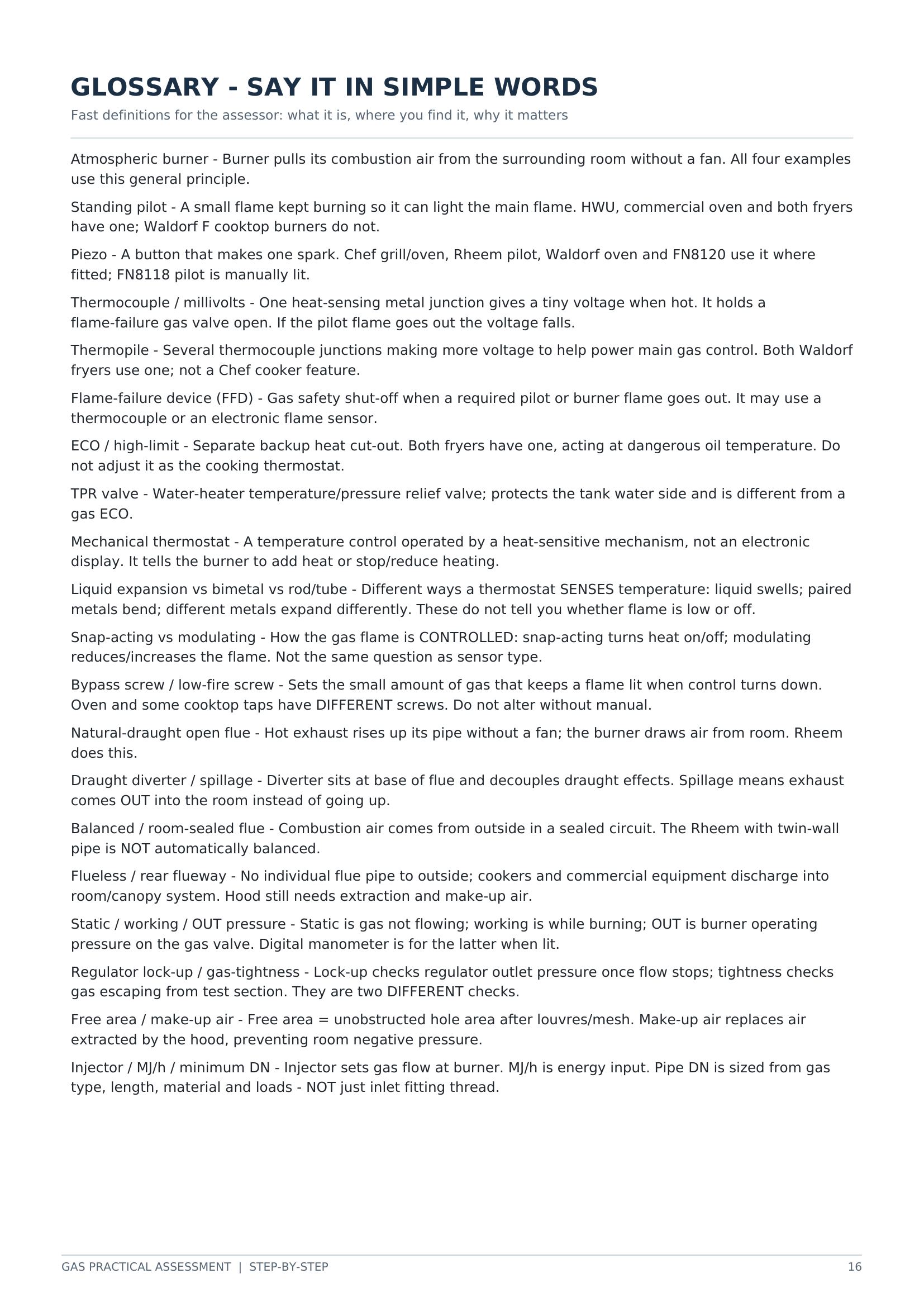
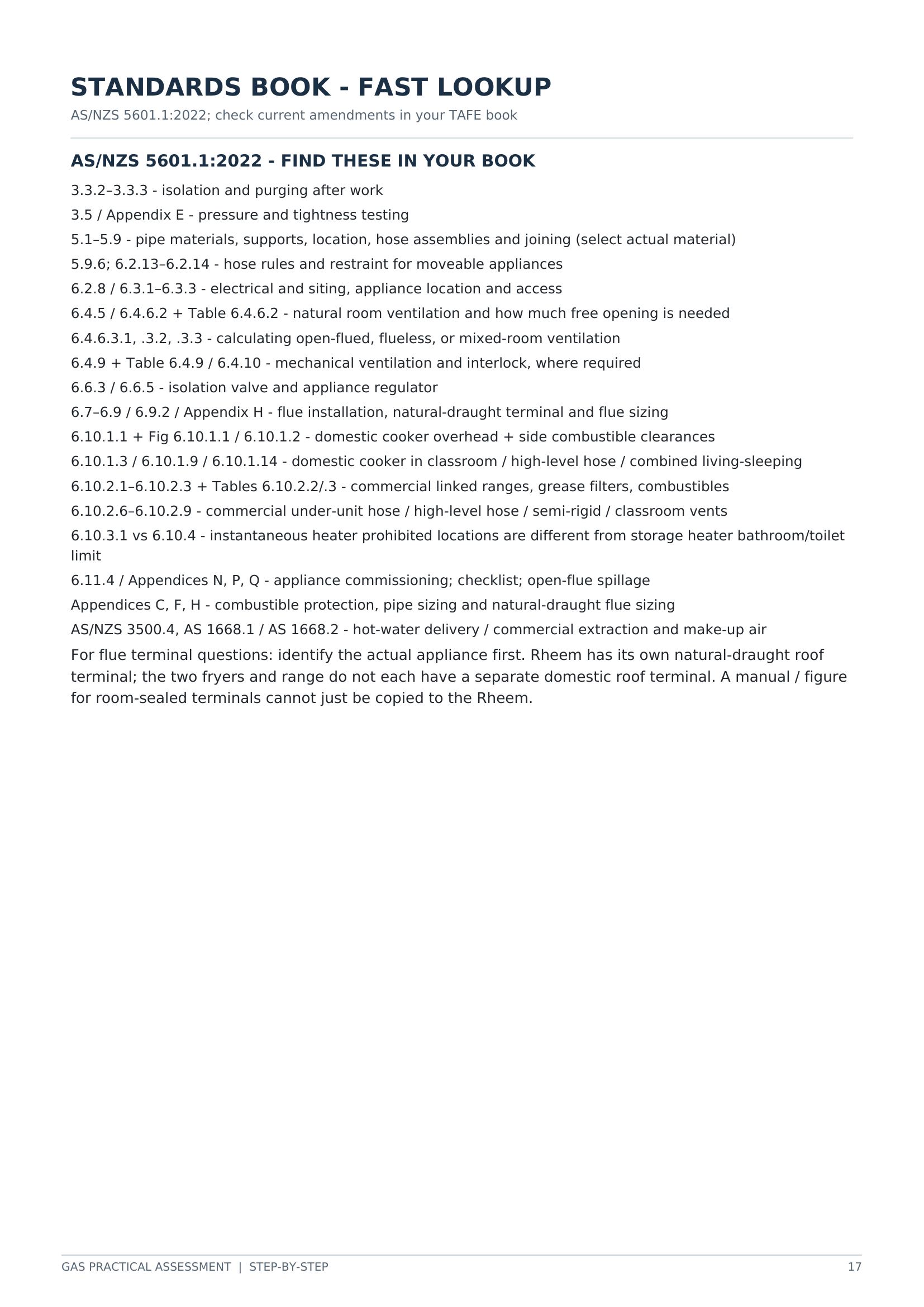
Calculated tool for checking your work. Confirm final sizes and procedures against AS/NZS 5601.1 and your network operator's requirements.